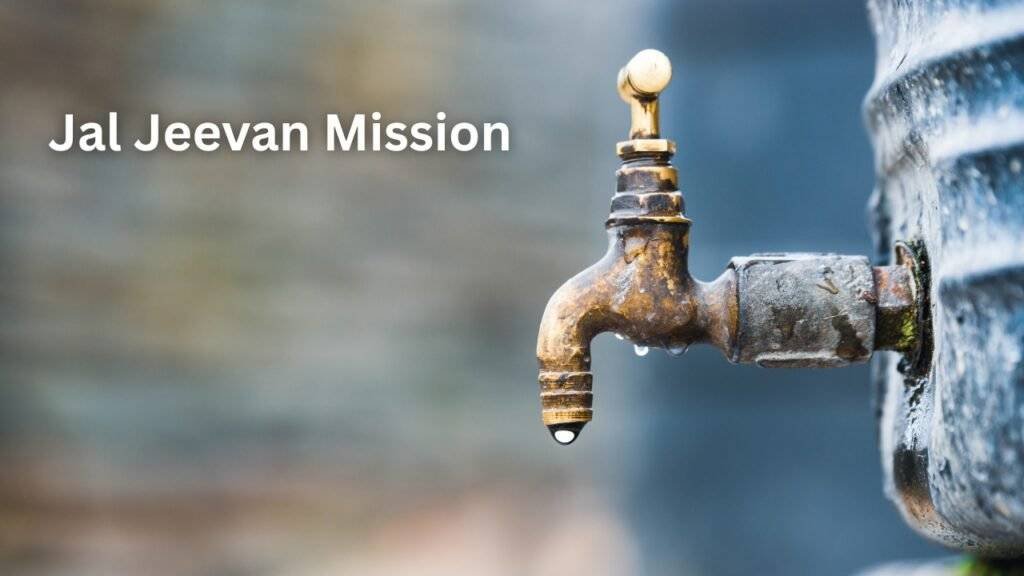
JJM is one of the biggest Government flagship programs in India targeting at providing safe drinking water to every rural household. This is part of a mission, initiated in 1993, to make safe tap water available and not only have reliance on contaminated waters to ensure better public health and living standards.
In this article, you will find an elaborate yet simple explanation of the scheme outlining all aspects and information about it, overview, objectives, eligibility criteria, document requirement, application process and benefits of the scheme.
Overview of Jal Jeevan Mission
The Jal Jeevan Mission, was launched on 1st August 2019 in front of Indian Government’s flagship programme under the Ministry of Jal Shakti. At any point of time, the mission aims to ensure delivery of Functional Household Tap Connections (FHTC) to all rural households in the country.
The plan is most importantly to provide “Har Ghar Jal” (water in every home). A significant emphasis on water quality, sustainability of water source and certainly more focus area for community participation in the whole aspect of water management related to two things.
Key Highlights of Jal Jeevan Mission
| Feature | Details |
| Scheme Name | Jal Jeevan Mission |
| Launch Year | 2019 |
| Ministry | Ministry of Jal Shakti |
| Objective | Safe drinking water to rural households |
| Target | 100% rural tap water coverage |
| Implementation | State & local governments |
The scheme is implemented in collaboration with state governments and local bodies to ensure proper water distribution and infrastructure development.
Objectives of Jal Jeevan Mission
The mission has several long-range goals directed at enhancing rural living and health standards.
Its main aim is to provide every rural house with a tap water connection that works throughout the year. This minimizes reliance on unreliable sources of water such as wells, ponds, and hand pumps.
Another key objective is to enhance standards for water quality. Mission ensures water supplied through taps is potable and as per guidelines for health. The other aspect is watch on containment and hygiene.
One prominent goal is the sustainability of water resources. The scheme encourages techniques related to rainwater harvesting, groundwater recharge and water conservation for sustained supply of drinking water.
Community engagement is another crucial goal. Local water systems management aspects under the supervision of villagers are handled to allow for vigilant maintenance and accountability.
Eligibility Conditions for Jal Jeevan Mission
The Jal Jeevan Mission is not so much about water availability or Marginalised,More broadly, the Jal Jeevan Mission is a rural development scheme with stated objectives to change lives of households in rural areas.
It has a very simple and inclusive eligibility criteria, which guarantees maximum coverage of the population.
Eligibility Conditions:
- The applicant should be a resident of rural India.
- The household must not already have a working tap water connection
- The focus is on the areas having shortage of water
- Encouragement of community-based participation on local water committees
- Since the scheme is universal in rural areas, there are no rigid income criteria
The mission is meant to reach all rural households gradually, so location (or the provided water supply) matters most for eligibility.
Required Documents for Application
To apply or register under the Jal Jeevan Mission some basic documents are mandatory. This will help with the verification of identity, and ensure correct installation of the connection.
Important Documents:
- Aadhaar Card of the applicant
- The references of the residence proof (ration card, electricity bill or voter ID)
- Passport-size photograph
- Land ownership or house proof (if required)
- Mobile number for communication
- Approval from local Gram Panchayat (some cases)
These supporting documents are essential for local authorities to confirm eligibility and provide a seamless application experience.
Jal Jeevan Yojana Registration Process
The application process of Jal Jeevan Mission majorly works at the ground level (Gram Panchayats and state water departments).
Step-by-Step Application Process:
First, the applicant must contact the local Gram Panchayat or village water committee. These are the powerhouses, which executes this entire scheme through ground activities.
Then the household submits the necessary paperwork to local authorities. The application form contains various Details such as Applicant Name, Address and Water Connection nearby or not.
Once the application is submitted, local officials will validate it. They verify what utilities are available in the location, and if adequate sources for water supply exist.
When the application is accepted, accredited departmental workers or contractors build the tap water connection.
Last, we provide a functional tap connection again under the Jal Jeevan Mission to this household.
Benefits of Jal Jeevan Mission
Components of Jal Jeevan Mission and their role in improving rural life & public health is a huge advantage.
Key Benefits:
- The availability of safe and clean drinking water at home
- Decrease in water-borne diseases like cholera and diarrhea
- Saves time, this is important for professional careers and households, especially with women / children who used to go fetch water
- Hygiene and sanitation among rural houses
- More attending school, by spending less time fetching water
- Strengthening rural infrastructure and water systems
- Community empowerment through local water management groups
These advantages greatly enhance the quality of life in rural areas, fostering sustainable long-term development.
Implementation Strategy and Progress
The Jal Jeevan Mission works in collaboration with state governments and local bodies. A VAP is prepared for each village.
Digital dashboards and regular government reports are used for monitoring the progress of, scheme. The implementation is built on key components such as transparency and accountability.
The government also works to ensure basic in-house training for local workers to maintain and repair the water supply systems. This helps in the long-term sustainability of the infrastructure.
Challenges in Implementation
But with achievements, the mission has its share of challenges.
Water scarcity in the arid regions is one of the major problems. Groundwater levels are particularly low in some areas making it difficult to sustain supply continuously.
Infrastructure building in distant villages presents another problem. At some cases there are no proper pipelines, storage systems in place.
Maintenance wise, the villagers should also be aware. But in some places, the development of community participation still needs to grow and so that can have a role over time efficiency.
These, however, have not deterred ongoing government measures to improve implementation speed and coverage.
Also Read: PM Matsya Sampada Yojana | One Nation One Subscription Scheme
Impact on Rural Development
The Jal Jeevan Mission has a far-reaching positive impact in rural regions across India.
It has reduced waterborne diseases, so improving health conditions. It has also liberated women burdened with traveling long distances to obtain water.
People save time and devote themselves to new activities such as education and work, which increases the productivity of the economy. Better access to water has also helped schools and healthcare centres in rural areas.
It has overall assisted in transforming rural India, keeping basic water needs at household level.
Conclusion
The Jal Jeevan Mission is one of the biggest rural development schemes in India naționaly. It works on multiple aspects of giving safe drinking water to every household, health and rural living.
One of the greatest human needs to have access to clean water is responded as mission supplying by providing support. With full implementation and public involvement, it is advancing towards “Har Ghar Jal” vision.
It’s not about drinking water supply, its about making rural India healthier, sustainable and empowered.
Also Read: Amrit Bharat Station Scheme | Pradhan Mantri Jan Dhan Yojana | EPS-95 Pension Scheme