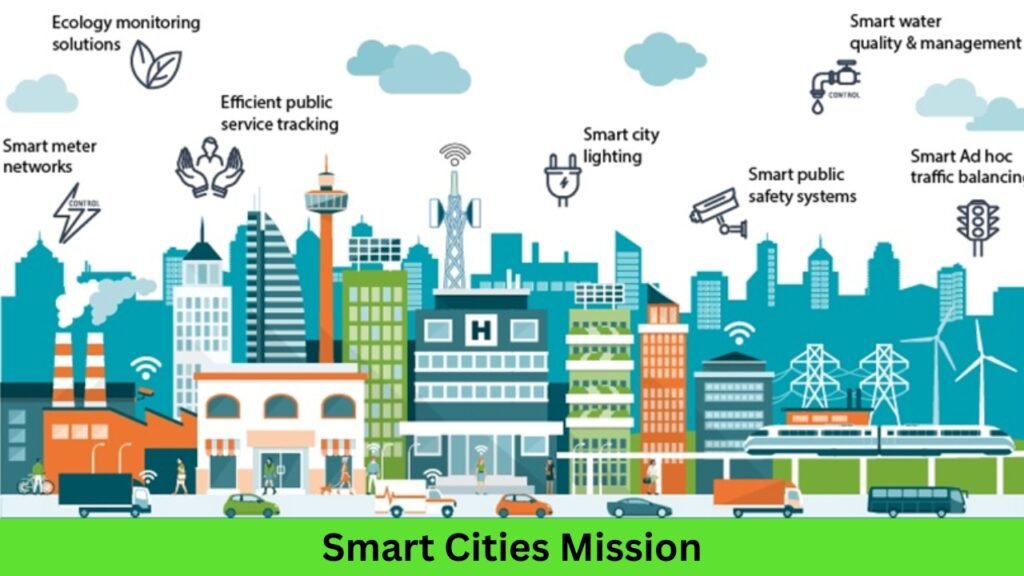
In 2015, the Government of India decided to implement the Smart Cities Mission to all urban areas with plans for modernisation and sustainability through technological advancement. As the population of India swells and urbanisation spreads, cities are increasingly plagued by traffic congestion and pollution; deteriorating infrastructure; water shortages, and waste management challenges. One of the largest urban development initiatives in India is the Smart Cities Mission launched by gov- ernment to address such issues.
The mission is focused on upgrading infrastructure and transportation, governance, energy management, sanitation and digital services. One of the main goals of the project is to offer its citizens a contemporary, equal quality of life, ennobling gentle expansion and economy
The following are the objectives, features, benefits, funding and challenges related to the Smart Cities Mission that have been defined in detail. Expectations Implementation: Importance of Smart City Mission.
What is Smart Cities Mission?
Smart Cities Mission: The flagship mission of the Government of India is intended to develop urban centres into smart cities with a core goal of making cities clean and sustainable, self-sufficient as well as technologically strong and citizen-friendly smart cities. The mission promotes smart solutions for infrastructure renovation and public service improvement.
The initiative mainly focuses on:
- Sustainable urban planning
- Better governance
- Digital transformation
- Efficient transportation
- Improved quality of life
It is a new mission that provides financial/technical assistance to selected cities for physical activities under modern urban development projects.
Objectives of Smart Cities Mission
To facilitate a city humanity which may undergo acceptance in the near or far future, Smart Cities Mission came into existence with aims of enhancing living standards and majestic growth drill.
Improved Urban Infrastructure
This involves upgrading roads, drainage, public transport, power supply, sanitation and housing facilities to make cities safer and more habitable for their residents.
Smart Governance Systems
The government promotes digital governance systems that provide citizens with access to public services online, eliminate paperwork, promote transparency and enhance administrative efficiency across cities.
Sustainable Development
This mission promotes eco-friendly urban planning with green buildings, renewable energy projects, efficient water supply systems and reduced pollution in cities.
Better Transportation Facilities
Smart traffic management systems, smart transport networks and enhanced public transport amenities control congestion, enabling easier daily commutes for the citizens.
Improved Public Safety
Urban security is enhanced through the use of CCTV cameras, automatic number plate recognition, integrated command and control centres and emergency response services.
Economic Growth and Employment
Smart city projects invite investments, industries, startups and tourist centres leading to creation of jobs and enlivening local economies in India.
Features of Smart Cities Mission
Smart cities mission is a few of the cutting-edge capabilities included in urban control and public services.
Smart Transportation Systems
Smart transportation systems utilize advanced traffic signals, GPS tracking, smart parking solutions and intelligent public transport systems to facilitate smoother traffic flow and pattern and alleviate congestion.
Digital Public Services
Digital portals, mobile apps, and smart kiosks help citizens connect with the best e-governance services, making administration more efficient & transparent for citizens.
Smart Energy Management
The Mission aims at promoting energy-efficient technologies and companies like LED street lighting, solar power systems and smart electricity grids saving more in terms; but your costs.
Advanced Waste Management
As well, with the arrival of contemporary rubbish assortment and recycling techniques in addition to scientific waste disposal methods, most of the world’s cities have grow to be respectable areas for reducing air pollution.
Water Supply Management
Urban Water disruptions have become more frequent, but the lack of proper water management technologies causes a lot of wastage within urban and smart water monitoring system, administrative building block infrastructure.
Integrated Command and Control Centres
Most smart-cities imply a centralized content-monitoring system to conveniently manage everything from traffic management, public security to emergency services and disaster response using real-time analysis of data.
Key Components of Smart Cities Mission
Different segments of urban areas are targeted in the Smart Cities mission for group meaningful redevelopment.
Area-Based Development (ABD)
Area-Based Development consists of redevelopment, retrofitting or greenfield projects aimed at restructuring certain portions of cities into modern urban areas characterized by good infrastructure.
Pan-City Development
These are almost city-wide and encompass the smart solution implementations in the entire city, like Intelligent Traffic Systems, Smart Governance Platforms and Integrated Public Service Technologies.
Citizen Participation
Citizens are practically involved in planning and executing smart city projects through surveys, public consultations and various community engagement activities carried out by authorities.
List of Smart Cities in India
The Government of India selected 100 cities from different states under the Smart Cities Mission to implement modern urban development projects and smart infrastructure systems.
| City | State |
| Indore | Madhya Pradesh |
| Surat | Gujarat |
| Pune | Maharashtra |
| Ahmedabad | Gujarat |
| Bhopal | Madhya Pradesh |
| Lucknow | Uttar Pradesh |
| Jaipur | Rajasthan |
| Visakhapatnam | Andhra Pradesh |
These cities are working on various smart initiatives related to transportation, waste management, water supply, and digital governance systems.
Benefits of Smart Cities Mission
Smart Cities Mission offers numerous benefits for Australians and the wider social, environmental and economic elements, which will provide citizens, businesses and local governments with long-lasting, better infrastructure that uses modern urban management systems.
Better Quality of Life
Better roads, transport and health facilities, sanitation systems as well as additional public services allow for safer and cleaner urban life with improved living conditions.
Reduced Pollution Levels
Smart waste management systems, clean energy projects and improved public transport combat environmental degradation while facilitating sustainable urbanisation in cities.
Improved Public Services
Digital governance systems allow citizens to avail of services in a timely manner and minimise delays, corruption and unnecessary paperwork experienced at Government offices and departments.
Increased Employment Opportunities
In smart cities, industries, businesses and startups are attracted to its urban development projects, which further leads to job creation and increase of economic activities.
Efficient Urban Mobility
Innovative traffic management looks to reduce this by delivering solutions that minimize travel time and traffic congestion, and effectively aim at reducing fuel consumption for daily commuters through more efficient public transport systems.
Implemented Technology in Smart Cities Mission
Technology is one of the most vital components among various elements of the Smart Cities Mission as it helps in developing practical urban planning, monitoring and public service delivery systems.
Internet of Things (IoT)
That is, the information that IoT devices collect and share in order to increase efficiency in managing things like traffic, water supply, electricity usage and environmental conditions by analysing real time data.
Artificial Intelligence (AI)
Artificial Intelligence assists in processing urban data, optimizing traffic systems, forecasting maintenance needs, and public safety monitoring scenarios powered by smart technology.
GIS Mapping Technology
Urban Planning, Mapping Infrastructure, Land management and more city efficient way to work using Geographic Information Systems (GIS)
Smart Sensors
Smart sensors, that provide continuous monitoring of water levels, pollution levels of the surrounding environment, traffic flow and energy consumption gives authorities better insights to decide on city management.
CCTV Surveillance Systems
Modern surveillance systems have been used to enhance our security, manage traffic violations and assist law enforcement in emergencies.
Funding Structure of Smart Cities Mission
The Smart Cities Mission receives financial support from central governments, state governments, and private companies through multiple funding mechanisms.
| Funding Source | Contribution |
| Central Government | ₹500 Crore per City |
| State Government | Matching Contribution |
| Public-Private Partnerships | Additional Investments |
This combined funding model helps cities implement large-scale urban infrastructure and technology projects effectively.
Challenges In To Smart Cities Mission
The Smart Cities Mission has made substantial headway, but there are still multiple implementation challenges across various regions of India.
Financial Constraints
Oftentimes, lack of financial resources, increasing infrastructure costs and lagging funding allocation processes make cities delay the implementation of proposed projects.
Rapid Urban Population Growth
The rapid growth of urban population in India leads to increasing strain on housing, transportation, sanitation and public infrastructure systems in the cities.
Land Acquisition Problems
Many such developments involve land aggregation and can lead to legal litigation causing a significant delay in the execution of projects.
Technical and Digital Challenges
The deployment of advanced technologies in cities often requires skilled manpower and technical infrastructure, as well as constant system maintenance, making it difficult for certain regions to implement such solutions.
Coordination Between Agencies
Naturally, there needs to be coordination between the various arms of government — but if this falls below par, it has been known to lead to slow-moving projects and sluggish decision-making processes.
Significance of Smart Cities Mission in Case of India
India is going through an urban revolution and the Smart Cities Mission has great significance for sustainable future development, economic advancement and comfortable living standards.
Supports Sustainable Urbanisation
This mission enables management of cities facing a growing population through proper city planning, infrastructure delivery and systems for resource management.
Encourages Digital Transformation
Digital Governance and smart technologies make government services more transparent, efficient and accessible to its citizens in urban regions.
Boosts Economic Development
Better urban facilities and modern infrastructure attract businesses, investors, industries, and tourism, which help in strengthening local economies by increasing the number of jobs available.
Improves Global Competitiveness
Such smart cities not only work towards making the urban areas modernised but also help India generate a positive image in the global stage as a better country with such advanced infrastructure, which, to an extent, meet global standards.
Smart Cities Mission for UPSC Preparation
The Smart Cities Mission is an important topic for UPSC and other competitive examinations related to governance, urban development, and public administration.
| Topic | Details |
| Launch Year | 2015 |
| Ministry | Ministry of Housing and Urban Affairs |
| Main Objective | Sustainable Urban Development |
| Number of Cities | 100 |
| Key Focus | Technology-Based Urban Planning |
UPSC aspirants should study the mission’s objectives, funding structure, implementation challenges, and technological aspects for examination preparation.
Also Read: Rashtriya Gram Swaraj Abhiyan | Samagra Shiksha Scheme | PM Shram Yogi Mandhan Yojana 2026
Successful Smart City Project Examples
There are various smart projects executed in different Indian cities under the Smart Cities Mission.
Indore Smart City
The mission helped establish Indore as a leader in waste management systems, cleanliness initiatives and smart enhancements of public services.
Surat Smart City
To bolster urban management, Surat created smart surveillance systems and flood management technologies, as well as introducing intelligent transportation infrastructure.
Bhopal Smart City
To improve corporate governance, Bhopal saw the phenomenon of integrated command centres, smart roads, public Wi-Fi systems and digital governance initiatives.
Conclusion
The Urbanization programme is one of the biggest ultra-modern cities within the world and The Smart Cities Mission is one in every of the major part & component oof it in India, Transform all Indian cities into supported with unique interesting Modern, Technological & Citizen Friendliness urban centers. It aims to enhance infrastructure, digital governance, transportation (rail and metro), sanitation and environment in select cities.
While the initiative struggles with hurdles like funding constraints, rapid urbanization and challenges related to technology implementation, it is doing its part in making cities livable while also promoting economic development. As cities in India keep expanding, so too will the ambition of the Smart Cities Mission — it is pivotal to modern urban development in India.
Read Also: Atal Bhujal Yojana | Digital India Mission | ehrms upsdc gov in | ehrms gujarat