This academic research paper used the RSBY database as one of the pioneering government health insurance schemes initiated in India, catering to social assistance for financially weaker section families and particularly workers from the unorganized sector. Fundamentally, the scheme provides cashless hospitalization under smart card technology at any of the empanelled public and private hospitals against medical expenses to be incurred by the eligible beneficiaries. While many new health insurance schemes like Ayushman Bharat have been launched in multiple regions, RSBY remains one of the landmark reforms in India’s health sector because it is still often cited, and one can find its data and legacy beneficiary databases in numerous Government documents.
Rashtriya Swasthya Bima Yojana Overview
| Particular | Details |
| Scheme Name | Rashtriya Swasthya Bima Yojana (RSBY) |
| Launched By | Government of India |
| Launch Year | 2008 |
| Ministry | Ministry of Labour & Employment (later transferred to Ministry of Health & Family Welfare in 2015) |
| Objective | Provide health insurance to poor and unorganized sector families |
| Coverage | ₹30,000 per family per year |
| Benefit Type | Cashless hospitalization |
| Enrollment Fee | ₹30 (one-time registration) |
| Family Coverage | Up to 5 family members |
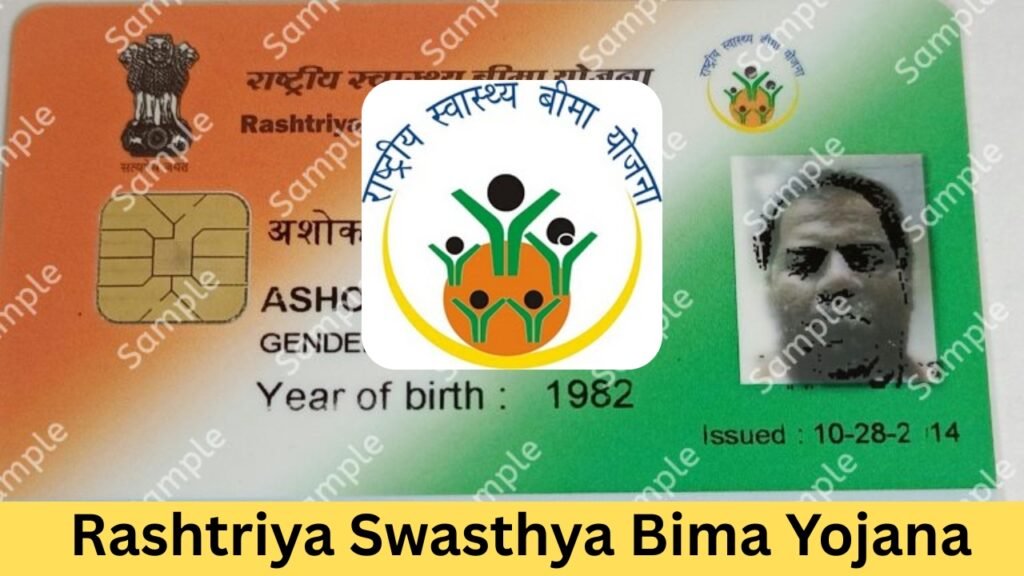
| Card Type | Biometric Smart Card |
What is Rashtriya Swasthya Bima Yojana?
Rashtriya Swasthya Bima Yojana (RSBY) is a centrally sponsored health insurance programme aimed at effectively protecting the households below the poverty line (BPL), and some identified vulnerable groups from the financial liabilities arising out of hospitalization. The new scheme implemented biometric smart cards to give beneficiaries the facility of receiving treatment at empanelled hospitals across the country, thereby delivering accessibility to care, especially for migrant workers.
One of the biggest successes of RSBY was to cause cashless treatment, where poor families would no longer have to borrow money for hospitalization,
Objectives of Rashtriya Swasthya Bima Yojana
The primary objectives include:
- Heal economically weaker families at an affordable price.
- Reduce out-of-pocket medical expenses.
- Promote access to quality healthcare.
- Offer financial protection during hospitalization.
- To cover informal sector workers.
- Do not miss portability of migrant workers nationally.
- Encourage private hospitals as well to join in.
Key Features of RSBY
Some important features of the scheme include:
- Cashless hospitalization.
- Smart card-based identification.
- Nationwide portability.
- Coverage for pre-existing diseases.
- Maternity benefits included.
- Choice of government and private hospitals.
- Paperless claim settlement.
- Biometric authentication.
- Family floater insurance.
- Minimal registration cost.
Benefits of Rashtriya Swasthya Bima Yojana
Cashless Medical Treatment
Cashless hospitalization support for eligible families without having to pay money to a hospital first.
Health Insurance Coverage
It provides an annual cover of up to ₹30,000 per year on a family floater basis.
Coverage for Pre-existing Diseases
There is no waiting period either, unlike many private insurance plans, and pre-existing illnesses are covered from day 1.
Maternity Benefits
Eligible procedures include hospitalization and maternity expenses during pregnancy.
Nationwide Portability
With the option to get treatment in empanelled hospitals throughout India, it becomes very valuable for beneficiaries as migrant workers.
Public and Private Hospitals
Patients have the option to receive treatment at government hospitals or both in approved private hospitals.
Reduced Financial Burden
It also helps poor households avoid falling into the trap of catastrophic medical expenditure.
Eligibility Criteria for Rashtriya Swasthya Bima Yojana
Eligible beneficiaries generally include:
- Below Poverty Line (BPL) families.
- Workers in the unorganized sector.
- Registered MGNREGA workers.
- Construction workers.
- Street vendors.
- Domestic workers.
- Railway porters.
- Sanitation workers.
- Auto-rickshaw and taxi drivers (in eligible states).
- Other vulnerable categories notified by the government.
Eligibility has varied across states over time.
Documents Required
Applicants generally need:
- Aadhaar Card
- Ration Card
- BPL Card (where applicable)
- Address Proof
- Identity Proof
- Passport-size photographs
- Mobile number
- Family details
Diseases Covered Under Rashtriya Swasthya Bima Yojana
Coverage includes hospitalization for numerous conditions, including:
- Heart diseases
- Kidney disorders
- Cancer (specified treatments)
- Fractures
- Appendicitis
- Gall bladder surgery
- Cataract surgery
- Hernia
- Gynecological procedures
- Maternity-related hospitalization
- General surgeries
- Accident-related treatment
The exact package list depends on the empanelled hospital and government-approved treatment packages.
How to Apply for Rashtriya Swasthya Bima Yojana
Basically, the original application process was very minimal and friendly for beneficiaries, though RSBY has now mostly been merged into Ayushman Bharat – PM-JAY. The procedure that qualifying families undertook to sign up for the scheme is outlined below.
Check Your Eligibility
So, the first step is to check whether your family belongs to any of the above-mentioned eligible categories (like BPL households or only notified unorganized sector workers). Government records and beneficiary lists were used to verify eligibility.
Visit the Enrollment Center
Go to the nearest RSBY enrollment camp or the district health office, sign up at any place you can step by the entry counter with the documents, and check over.
Submit Required Documents
Submit documents like Aadhaar Card, BPL card, ration card, identity address proof, and family verification.
Complete Biometric Registration
They took your fingerprints and photograph to produce a biometric smart card that was associated with your health insurance benefits.
Receive the Smart Card
On satisfying the verification process and payment of a modest amount as a nominal registration fee, beneficiaries were issued with an RSBY smart card, which made cashless hospitalization possible at empanelled hospitals.
How Does the RSBY Smart Card Work?
The smart card stores:
- Beneficiary details
- Biometric information
- Family information
- Insurance balance
- Hospitalization history
During admission, the hospital verifies the card and biometric data, after which treatment is provided cashlessly.
Hospital Network
RSBY beneficiaries could receive treatment at:
- Government hospitals
- District hospitals
- Community Health Centres
- Approved private hospitals
- Specialty hospitals empanelled under the scheme
Also Read: Post Office Fixed Deposit Scheme 2026 | Kisan Credit Card Scheme | One Nation One Ration Card
RSBY vs Ayushman Bharat (PM-JAY)
| Feature | RSBY | Ayushman Bharat |
| Launch | 2008 | 2018 |
| Coverage | ₹30,000 | Up to ₹5 lakh per family |
| Beneficiaries | BPL & selected vulnerable groups | Eligible poor and vulnerable families under PM-JAY criteria |
| Card | Smart Card | Ayushman Card |
| Hospitalization | Cashless | Cashless |
| Portability | Yes | Yes |
| Status | Largely merged/replaced | Current flagship scheme |
In many states, RSBY beneficiaries have transitioned to Ayushman Bharat – Pradhan Mantri Jan Arogya Yojana (PM-JAY), though the transition may vary by state.
Advantages of Rashtriya Swasthya Bima Yojana
- Affordable healthcare access.
- Financial protection for poor families.
- Cashless hospitalization.
- Portable across India.
- Reduced medical debt.
- Technology-driven smart card system.
- Inclusion of private hospitals.
- Coverage for pre-existing diseases.
Current Status of Rashtriya Swasthya Bima Yojana (2026)
RSBY was one of the first schemes in India to broaden health coverage among low-income families. But after Ayushman Bharat, PM-JAY was rolled out in 2018, several of the states integrated or supplanted RSBY with the new scheme w, which offered much higher health coverage. A few legacy records of RSBY, smart card systems, and limited state-level references are preserved to help in administrative work and verification.
FAQs about Senior Citizen Saving Scheme
1. Is Rashtriya Swasthya Bima Yojana still active?
RSBY has largely been replaced by Ayushman Bharat (PM-JAY) in many states, though legacy records and some state-level implementations may still exist.
2. What is the insurance coverage under RSBY?
The scheme provides up to ₹30,000 per family per year for eligible hospitalization expenses.
3. Who can benefit from RSBY?
Originally, BPL families and several categories of workers in the unorganized sector were eligible.
4. Is treatment cashless?
Yes. Treatment is provided cashlessly at empanelled hospitals using the RSBY smart card.
5. How many family members are covered?
The scheme was designed to cover up to five family members under a family floater policy.
6. Which ministry manages RSBY?
The scheme was launched by the Ministry of Labour & Employment and transferred to the Ministry of Health & Family Welfare in 2015.
Conclusion
Rashtriya Swasthya Bima Yojana (RSBY) was a path-breaking health insurance scheme that transformed access for millions of poor households and informal workers in India to affordable services. This laid the foundation for future reforms in health insurance due to its cashless model of treatment, smart card technology, and nationwide portability. RSBY may remain an important chapter for India’s journey to universal health coverage, but its lessons are still relevant, amply so since Ayushman Bharat PM-JAY has now emerged as the flagship scheme of public health insurance in India.
Also Read: UJALA Scheme | Sukanya Samriddhi Yojana | Senior Citizen Saving Scheme