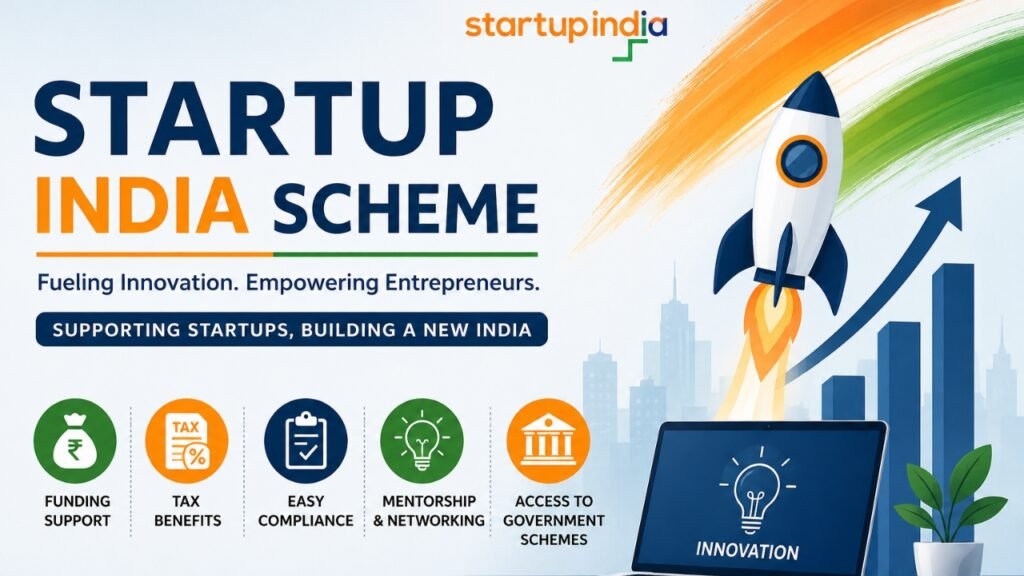
Today, India is one of the fastest-growing startup ecosystems worldwide. The Startup India Scheme was launched by the Government of India to promote innovation, entrepreneurship, and job creation. The initiative has provided assistance to thousands of startups in obtaining funding, tax benefits, mentorship, and simplified compliance with regulations since it was introduced.
From an entrepreneur, student, investor or UPSC aspirant perspective, every individual can find key takeaways about the Startup India Scheme, which plays a vital role in revolutionising India’s startup landscape.
This article is a compendium covering the Startup India scheme objectives, eligibility criteria, benefits, and the registration process, along with tax incentives, etc.
What is the Startup India Scheme?
For Entrepreneurs, the Startup India Scheme is a government initiative to advertise and support entrepreneurship. This scheme is all about establishing a stronger ecosystem that can work is to ensure that the startups flourish with funds available, less taxation, a simple regulation framework, and possibilities of getting funding easily.
The project aims to support young entrepreneurs in creating new products and services, while providing jobs.
The Startup India Scheme Was Announced On
The Startup India program is an initiative taken by the Government of India, announced in the 69th Independence Day speech of Prime Minister Narendra Modi on 15 August 2015 and launched on 16 January 2016.
Startup India Scheme Details at a Glance
| Particulars | Details |
| Scheme Name | Startup India |
| Launched By | Government of India |
| Launch Date | 16 January 2016 |
| Ministry | Department for Promotion of Industry and Internal Trade (DPIIT) |
| Objective | Promote innovation and entrepreneurship |
| Beneficiaries | Eligible startups across India |
| Key Benefits | Tax exemptions, funding support, self-certification, easier compliance |
| Official Recognition | DPIIT Startup Recognition |
Objective of Startup India Scheme
The main aim of the Startup India Scheme is to provide a conducive environment for entrepreneurs who want to set up and grow an innovative business.
Major Objectives
- Promote innovation and technological advancement.
- Encourage entrepreneurship among youth.
- Generate employment opportunities.
- Attract domestic and foreign investments.
- Simplify startup regulations and compliance.
- Use capital and consulting mentorship to support start-ups.
- Bolster India’s global startup position.
This initiative aims at making India a job-creating country rather than a job-seeker country.
Startup India Scheme Eligibility
Before applying for recognition under the Startup India initiative, businesses must satisfy specific eligibility criteria.
| Criteria | Requirement |
| Entity Type | Private Limited Company, LLP, or Registered Partnership Firm |
| Age of Startup | Not more than 10 years from incorporation |
| Annual Turnover | Should not exceed ₹100 crore in any financial year |
| Innovation Requirement | Must work towards innovation, development, improvement, or scalable business model |
| Original Entity | Should not be formed by splitting or reconstructing an existing business |
Who Can Apply?
The following business structures can apply:
- Private Limited Companies
- Limited Liability Partnerships (LLPs)
- Registered Partnership Firms
Sole proprietorship businesses are generally not eligible for DPIIT startup recognition.
Startup India Scheme Registration Process
One of the biggest advantages of the initiative is its simple online registration process.
Step 1: Incorporate Your Business
Register your business as:
- Private Limited Company
- LLP
- Registered Partnership Firm
Step 2: Create an Account
Visit the official Startup India portal and create an entrepreneur profile.
Step 3: Apply for DPIIT Recognition
Fill out the Startup Recognition application form and provide:
- Business details
- Founder information
- Incorporation certificate
- Innovation description
Step 4: Upload Documents
Submit the required documents supporting the innovative nature of your startup.
Step 5: Receive Recognition Certificate
Upon successful verification, DPIIT issues a Startup Recognition Certificate.
This recognition allows startups to access numerous government benefits and incentives.
Benefits of Startup India Scheme
The initiative is aimed at providing multiple benefits to startups that alleviate their financial burden and lessen the hassle of operations every now and then.
1. Tax Benefits
All start-ups can qualify, and eligible startups are given large tax exemptions that save capital in the growth phase.
2. Easy Compliance
Selected labor and environmental laws will allow startups to self-certify compliance.
3. Faster Patent Filing
The scheme provides:
- Fast-track patent examination
- Reduced government fees
- Facilitator support
4. Access to Funding
Bringing Startups to the attention of investors, venture firms, and government-backed funding initiatives.
5. Networking Opportunities
Entrepreneurs can connect with:
- Industry experts
- Mentors
- Investors
- Incubators
6. Government Tenders
Government tenders have expanded eligibility norms for recognized startups.
7. Startup Learning Programs
The Startup India platform provides founders with access to educational resources and training programs.
Startup India Scheme Tax Benefits
Tax incentives are among the most attractive features of the Startup India initiative.
Key Tax Benefits
| Benefit | Details |
| Income Tax Exemption | Up to 3 consecutive years out of 10 years |
| Capital Gains Exemption | Available under specified conditions |
| Angel Tax Relief | Eligible startups may receive exemptions |
| Investment Incentives | Certain investments qualify for tax benefits |
Three-Year Tax Holiday
Eligible startups can claim a tax holiday for any three consecutive years within their first ten years of operation, helping conserve funds for expansion and innovation.
Startup India Scheme: Loan and Funding Support
A lot of entrepreneurs think Startup India is a Company that gives loans. The scheme mainly provides channels for access to government subsidy-fuelled capital.
FFS (Fund For Funds) for Startups
The Government also created a Fund of Funds to indirectly encourage startup investments through its investment in Venture Capital funds.
Credit Guarantee Scheme
The government also backs credit guarantee mechanisms to facilitate the access of startups to banks and financial institutions.
Sources of Funding Available
| Funding Type | Description |
| Angel Investors | Early-stage funding |
| Venture Capital | Growth-stage investments |
| Incubators | Seed funding and mentorship |
| Government Funds | Startup-focused schemes |
| Bank Loans | Business expansion financing |
How Startup India Supports Innovation
Innovation is at the core of the Startup India mission.
The initiative encourages entrepreneurs working in sectors such as:
- Artificial Intelligence
- FinTech
- EdTech
- HealthTech
- Agritech
- Renewable Energy
- Biotechnology
- E-commerce
Innovative startups receive recognition and support to develop scalable solutions that address real-world challenges.
Startup India Scheme for Students and Young Entrepreneurs
One of the major goals of Startup India is to encourage young innovators to pursue entrepreneurship.
Support Available for Students
- Innovation challenges
- Incubation centers
- Startup competitions
- Mentorship programs
- Skill development initiatives
Educational institutions across India now host startup incubation centres that help transform ideas into viable businesses.
Startup India and Employment Generation
The startup ecosystem contributes significantly to employment creation.
Impact on the Economy
| Area | Contribution |
| Job Creation | Millions of direct and indirect jobs |
| Innovation | Development of new technologies |
| Investment | Attraction of domestic and foreign capital |
| Economic Growth | Increased GDP contribution |
| Entrepreneurship | Growth of startup culture |
Startups have become major contributors to India’s economic transformation by creating opportunities across industries.
Challenges Faced by Startups
Despite the support offered under Startup India, entrepreneurs still face certain challenges.
Common Challenges
- Intense market competition
- Funding constraints
- Talent acquisition
- Regulatory compliance
- Customer acquisition costs
- Scaling operations
However, the Startup India ecosystem helps address many of these obstacles through policy support and networking opportunities.
Startup India Scheme Logo
The Startup India logo features a lion made of interconnected wheels, symbolising innovation, strength, and progress. The design represents India’s entrepreneurial spirit and technological advancement.
The logo has become a recognisable symbol of India’s growing startup ecosystem.
Startup India Scheme for UPSC Preparation
The Startup India initiative is an important topic for UPSC aspirants under:
- Indian Economy
- Government Schemes
- Entrepreneurship Development
- Economic Reforms
- Innovation Policies
Important UPSC Points
| Topic | Key Fact |
| Launch Year | 2016 |
| Announced By | Prime Minister Narendra Modi |
| Implementing Agency | DPIIT |
| Focus Areas | Innovation, funding, and job creation |
| Key Benefit | Tax exemptions and startup support |
Questions related to Startup India frequently appear in competitive examinations.
Short Note on Startup India Scheme
Startup India, launched by the Government of India in 2016, is one such initiative with a vision to develop a strong entrepreneurial ecosystem that will drive sustainable economic growth and generate huge employment opportunities. The scheme provides tax exemptions, reduced compliance burden, funding support, patent facilitation and recognition of startups by DPIIT. Its objective is to create a robust startup environment and make India the next innovation centre in the world.
Also Read: Digital India Mission | Smart Cities Mission | PM Matsya Sampada Yojana
What Is The Secret Behind Startup India Being Successful
There are many reasons for the success of Startup India:
- Strong government support
- Growing investor interest
- Digital transformation
- Increasing internet penetration
- Expanding startup ecosystem
- Availability of skilled workforce
India has joined the elite circle of global startup ecosystems with thousands of recognised startups operating in diverse sectors.
Conclusion
The Startup India Scheme has made a huge difference in ensuring the development of innovation and entrepreneurship among people all over the country. The business initiative has enabled many entrepreneurs to convert ideas into successful enterprises by means of provisions of tax exemptions, favourable regulations, funding facilities and mentorship support.
For many without founders, the DPIIT recognition under the Startup India Scheme came as a great help and an efficient way to sustainable growth in the long run. The Startup India initiative will continue to be an integral part of our speedily developing startup ecosystem that is at the forefront of development in both the national economy and technology.
The Startup India Scheme is an integral part of India’s entrepreneurial revolution and a must-know if you’re looking to start your own venture or are preparing for competitive exams.
FAQs about Startup India Scheme
1. What is the Startup India Scheme?
Startup India is a government initiative launched in 2016 to support startups through funding, tax benefits, and easier compliance.
2. Who can apply for Startup India registration?
Private Limited Companies, LLPs, and Partnership Firms that meet DPIIT eligibility criteria can apply.
3. What are the benefits of the Startup India Scheme?
Benefits include tax exemptions, patent support, easier regulations, funding opportunities, and access to government tenders.
4. Does the Startup India Scheme provide loans?
The scheme does not directly provide loans but helps startups access funding through government-backed programs and investors.
Also Read: PM Suraksha Bima Yojana | ehrms upsdc gov in | what is xovfullmins | Rani Lakshmi Bai Scooty Yojana