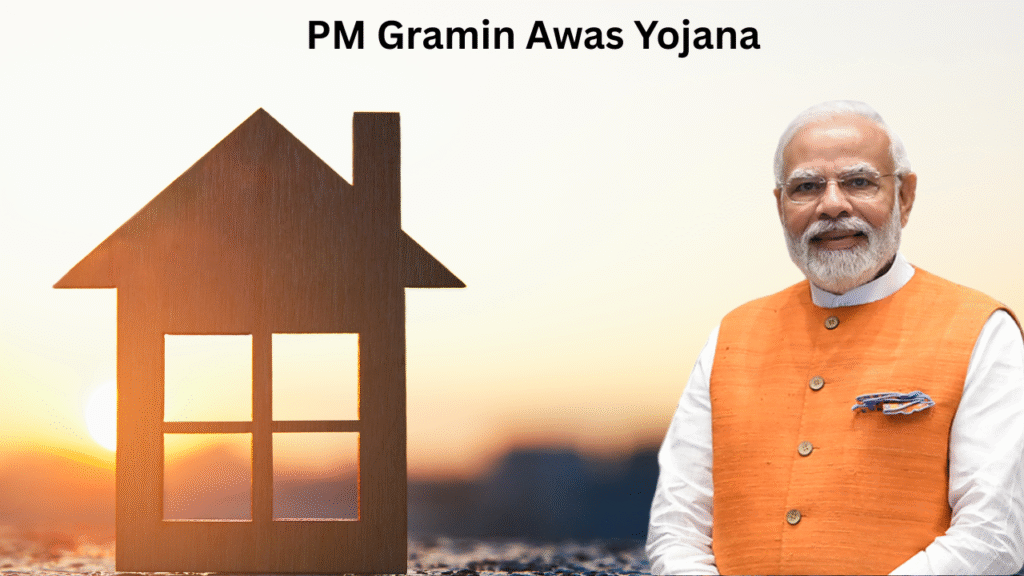
Housing is the third basic need for survival of human beings, and still, cow belts in India have seen millions of families moving from one corner to another just so that they could safely settle down after decades. In December 2016, to tackle this issue, the Government of India came up with a new rural housing scheme, Pradhan Mantri Awas Yojana Gramin (PMAY-G) or PM Gramin Awas Yojana. It aims to ensure that all eligible rural households in the country desiring the housing benefit are provided with pucca houses by 2022
PMAY-G has propelled millions of families out of kutcha houses into durable homes and enhanced living standards since its introduction. In this article, you will learn everything about PM Gramin Awas Yojana objectives, benefits, eligibility criteria to apply for the scheme, application process & financial assistance.
What is the PM (Prime Minister) Gramin Awas Yojana?
What is PMAY-G? Pradhan Mantri Awas Yojana Gramin (PMAY-G) is a flagship scheme of the Government of India, which provides permanent housing to people in rural areas who are living in temporary shelters It was launched as a sub-scheme of Indira Awaas Yojana (IAY) on 20 November 2016.
The scheme aims to provide all-weather housing to the rural households by providing pucca houses that are functional with basic amenities.
Objectives of PM Gramin Awas Yojana
The PM Gramin Awas Yojana was launched with three main objectives.
- Provide pucca houses to eligible rural households.
- Enhance the standard of living in rural regions.
- Reduce homelessness across villages.
- Providing sanitation, electricity and clean cooking fuel
- Promoting social and economic rural development in a sustainable way
- Nurture people from the economically backward sectors of society.
It has an important role in making the vision for a “Housing for All” by the Government a reality.
Key Features of PMAY-G
Below are the main features of the PM Gramin Awas Yojana:
Financial Assistance for House Construction
The government provides the funds to eligible beneficiaries to build a pucca house.
Increased House Size
The minimum size of a house under PMAY-G has been expanded from 20 square meters to 25 square metres, with cooking spaces.
Direct Benefit Transfer (DBT)
It directly deposits funds in the bank account of the beneficiary, thus providing an element of transparency and reducing delivery time.
Convergence with Other Schemes
Instead, beneficiaries may be able to receive benefits under schemes such as:
- MGNREGA
- Swachh Bharat Mission
- Ujjwala Yojana
- Jal Jeevan Mission
- Saubhagya Scheme
- Use of Technology
The scheme aims to track and hold accountable progress on construction through the use of mobile applications and geo-tagging technology.
Benefits of PM Gramin Awas Yojana
Benefits of PM Gramin Awas Yojana for Rural Families:
Permanent Housing
Assistance is provided to the beneficiaries in order for them to set up houses that are sturdy and weatherproof.
Improved Living Standards
The initiative provides families with access to living in healthier and safer environments.
Better Sanitation Facilities
Several homes have the toilets constructed under the Swachh Bharat Mission.
Financial Security
Government funding alleviates the cost of constructing a house.
Enhanced Rural Development
This plan also helps in the overall development of rural infrastructure and quality of life.
Financial Assistance Under PMAY-G
The amount of assistance provided under PM Gramin Awas Yojana depends on the geographical location:
| Area Type | Financial Assistance |
| Plain Areas | ₹1.20 Lakh |
| Hilly, Difficult, and North-Eastern Areas | ₹1.30 Lakh |
In addition to housing assistance, beneficiaries may also receive:
- Up to 90–95 days of wage employment under MGNREGA.
- Financial support for toilet construction.
- Assistance under other government welfare schemes.
Eligibility Criteria for PM Gramin Awas Yojana
To avail benefits under PMAY-G, applicants must meet specific eligibility conditions.
Eligible Beneficiaries
The following categories are generally eligible:
- Families living in kutcha houses.
- Households with no adult earning member.
- Landless laborers dependent on casual work.
- Scheduled Castes (SC) families.
- Scheduled Tribes (ST) families.
- Economically weaker rural households.
- Families identified through the Socio-Economic and Caste Census (SECC).
Who is Not Eligible?
The following households are generally excluded:
- Families owning a pucca house.
- Households with high-income assets.
- Government employees.
- Income taxpayers.
- Families owning significant agricultural equipment or vehicles.
Documents Required for PM Gramin Awas Yojana
Applicants may need the following documents:
- Aadhaar Card
- Voter ID Card
- PAN Card (if available)
- Bank Account Details
- MGNREGA Job Card (if applicable)
- Residence Proof
- Income Certificate
- Mobile Number
- Passport-size Photographs
How Beneficiaries are Selected
Like the above measure, one of the critical features of PMAY-G is its objective approach in selecting beneficiaries.
Candidates are chosen according to data from the Socio-Economic and Caste Census (SECC) 2011. Gram Sabhas then review the list to confirm that it is equitable.
It limits favoritism, making sure that the help has truly benefited households in need.
How to Apply for PM Gramin Awas Yojana
Step 1: Check Eligibility
Find out whether your family is on the PMAY-G beneficiary list.
Step 2: Go to the Gram Panchayat
Local Gram Panchayat offices provide information on eligibility and the application processes.
Step 3: Submit Required Documents
Submit documentation for verification
Step 4: Verification Process
The authorities verify clear details of the applicant along with his housing situation.
Step 5: Approval / Fund Transfer
After approval, the financial help is paid in phases directly to the beneficiary’s bank account.
PMAY-G House Design and Construction Standards
The scheme encourages:
- Disaster-resistant construction.
- Eco-friendly building materials.
- Proper ventilation and lighting.
- Hygienic living conditions.
- Improved structural safety.
Beneficiaries are free to choose suitable house designs while adhering to prescribed standards.
Progress and Achievement of PM Gramin Awas Yojana
PMAY-G has grown into one of the biggest rural housing schemes in the country.
Major achievements include:
- This builds the foundation for millions of rural houses sanctioned and completed.
- Significant reduction in rural homelessness.
- Better sanitation access and electrification.
- Improved standard of living for rural households
- Rise in women owning property.
This scheme is still an important element behing rural growth in whole India.
Also Read: PM Kusum Scheme | Smart Cities Mission | Rashtriya Gram Swaraj Abhiyan
Challenges Faced by PMAY-G
The scheme has been a great success, but not without its difficulties:
Delays in Construction
Others experience backlogs caused by labor shortages and materials costs.
Land Ownership Issues
Landless families on occasions fail to enjoy the full benefits of the scheme.
Rising Construction Costs
Inflation can hike the construction costs beyond the approved number.
Awareness Gaps
Numerous families who qualify for support are still in the dark about benefits.
The government is still addressing these issues with policy improvements and digital monitoring.
Significance of PM Gramin Awas Yojana
The PM Gramin Awas Yojana (PMAY-G) is not just a housing scheme. It will be a big move towards social well-being and inclusive development. The initiative provides secure houses and in turn, improves health, education, sanitation, and economic opportunities for rural households.
Because a permanent house is not just walls and a roof, it is dignity, security, and a foundation for a better tomorrow.
Conclusion
The PM Gramin Awas Yojana has proved to be a milestone in rural India. The scheme has changed the lives of millions of families who were forced to live in kuchha houses by providing them with financial assistance for pucca houses. Through open beneficiary selection, direct benefit transfer, and its alignment with other ULB initiatives, PMAY-G will help pave the way for India towards a formal Housing For All.
Eligible rural households have an opportunity to own a safe, permanent, and dignified home under Pradhan Mantri Awas Yojana Gramin as it plans to construct more number of houses in the states with lower availability of housing constructed as part of this scheme.
FAQs about PM Gramin Awas Yojana
1. What is PM Gramin Awas Yojana?
PM Gramin Awas Yojana is a government scheme that provides financial assistance to eligible rural families for constructing pucca houses.
2. Who is eligible for PMAY-G?
Rural households living in kutcha houses and identified through the SECC database are generally eligible.
3. How much assistance is provided under PMAY-G?
Beneficiaries receive ₹1.20 lakh in plain areas and ₹1.30 lakh in hilly or difficult areas.
4. How are beneficiaries selected under PM Gramin Awas Yojana?
Beneficiaries are selected based on SECC data and verified by Gram Sabhas.
5. Can I apply online for PMAY-G?
Beneficiary selection is generally conducted through government records and local authorities, but information can be accessed through official PMAY-G portals.
6. What is the objective of PM Gramin Awas Yojana?
The main objective is to provide safe, affordable, and permanent housing to eligible rural families across India.
Also Read: ehrms.upsdc.gov.in | what is xovfullmins | Rani Lakshmi Bai Scooty Yojana