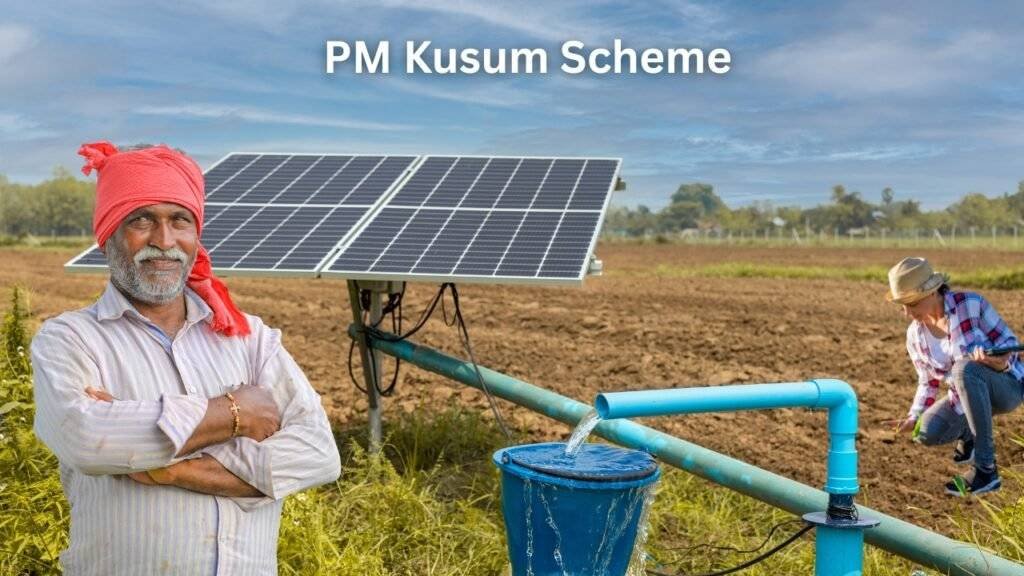
The agriculture sector in India heavily relies on electricity and diesel for irrigation. So as to minimise the cost of fuel for farmers with expensive fuel and desires for renewable energy, the Govt of India launched a pivotal initiative from the Ministry of New and Renewable Energy (MNRE) called the PM Kusum Scheme (Pradhan Mantri Kisan Urja Suraksha evam Utthaan Mahabhiyan) in 2019. The farmers are trained through this scheme to set up solar pumps and solar power plants, and at the same time, they can get additional income.
The PM Kusum Scheme is emerging as a pivotal renewable energy programme for rural India. It aids clean energy production, saves money on electricity bills and empowers farmers to achieve energy freedom.
In this comprehensive article, you get to know about each and every detail regarding the PM Kusum scheme, like objectives, benefits, eligibility, components of the scheme, subsidy details and application process.
What is the PM Kusum Scheme?
PM Kusum Full form is Pradhan Mantri Kisan Urja Suraksha evam Utthaan Mahabhiyan. IDEP, often known as a solar farm for an irrigation scheme, was launched by the Government of India to promote solar-based energy use in the agriculture sector.
Under this scheme, farmers can:
- Install solar-powered irrigation pumps
- Small Solar Power Plant on the unproductive land
- First, transform existing diesel pumps into solar ones
- Sell excess electricity to the electrical switchboard
The key objective of PM Kusum Scheme is to supply farmers with clean and affordable energy solutions and improve their income opportunities.
Objectives of the PM Kusum Scheme
The PM Kusum Scheme was introduced, having multiple important aims that would serve dual roles to benefit both farmers and the environment.
Promote Solar Energy in Agriculture
The initiative is aimed at promoting solar irrigation for farmers, replacing diesel and conventional electricity sources.
Reduce Dependence on Diesel Pumps
Diesel pumps are costly, and they pollute. Solar pumps offer a more environmentally friendly and cheaper option.
Increase Farmers’ Income
Farmers will produce electricity through the solar plants and can sell excess power to Distribution Companies, which will provide farmers with a secondary income.
Support Renewable Energy Goals
The scheme aims to assist India in using renewable energy in a lot more scaled manner, thereby reducing the carbon footprint.
This enables the provision of energy security for rural areas
Solar pumps ensure an uninterrupted supply of power for farmers in remote villages as well.
Key Features of PM Kusum Scheme
Here are some major highlights of the PM Kusum Scheme:
| Feature | Details |
| Scheme Name | PM Kusum Scheme |
| Full Form | Pradhan Mantri Kisan Urja Suraksha evam Utthaan Mahabhiyan |
| Launched By | Government of India |
| Ministry | Ministry of New and Renewable Energy |
| Main Objective | Solarisation of the agriculture sector |
| Beneficiaries | Farmers, cooperatives, panchayats |
| Benefits | Solar pumps, solar plants, subsidy support |
| Energy Source | Solar Power |
Components of the PM Kusum Scheme
The PM Kusum Scheme is divided into three major components.
Component A – Solar Power Plants
Under this component, farmers can install small solar power plants on barren or unused land.
Main Highlights
- Solar plants up to 2 MW capacity
- Farmers can use barren land for solar generation
- Electricity can be sold to DISCOMs
- Generates long-term income
This component is especially useful for farmers who own unused land and want to earn additional revenue.
Component B – Standalone Solar Pumps
This component supports the installation of standalone solar-powered agricultural pumps.
Features
- Replacement of diesel pumps
- Solar irrigation systems for farms
- Suitable for off-grid rural areas
- Helps reduce fuel expenses
Farmers using diesel pumps can significantly lower operational costs by switching to solar pumps.
Component C – Solarisation of Existing Grid-Connected Pumps
This component focuses on converting existing electric pumps into solar-powered systems.
Benefits
- Farmers can use solar power for irrigation
- Excess electricity can be sold back to the grid
- Reduces electricity bills
- Ensures reliable daytime power supply
Benefits of the PM Kusum Scheme
Farmers and rural communities stand to gain several benefits from the PM Kusum Scheme.
Reduced Irrigation Costs
Diesel fuel is also necessary for solar pumps, but they save money on electricity.
Additional Income Source
Farmers will be able to sell excess electricity produced by these solar systems.
Eco-Friendly Farming
The plan nourishes clean energy and combats environmental pollution
Long-Term Savings
A solar system needs a lot of investment upfront; however, they provide huge cost savings overall.
Better Power Availability
Solar pump offer a reliable energy source for farming during day hours.
Productive Use of Barren Land
Agricultural land not in use can be transformed into solar farms with income-generating capability.
Eligibility Criteria for PM Kusum Scheme
Different categories of applicants can apply for the PM Kusum Scheme.
Eligible Applicants
- Individual farmers
- Groups of farmers
- Farmer-Producer Organisations (FPOs)
- Cooperatives
- Panchayats
- Water User Associations
Land Requirements
Applicants must own suitable land for solar plant installation or agricultural operations.
Pump Eligibility
Farmers using diesel or electric irrigation pumps may qualify depending on the component selected.
PM Kusum Scheme Subsidy Details
One of the biggest advantages of the PM Kusum Scheme is the subsidy support provided by the government.
Subsidy Structure
Generally, the cost is divided as follows:
| Contribution Type | Percentage |
| Central Government Subsidy | 30% |
| State Government Subsidy | 30% |
| Farmer Contribution | 40% |
In some cases, loans are also available to help farmers cover their contribution.
The Beneficence of the PM Kusum Scheme for Farmers
There are many direct benefits under the PM Kusum Scheme for improving their financial condition.
Lower Farming Expenses
The costs of electricity and diesel are substantially decreased after the setup of a solar pump.
Stable Irrigation Facilities
Farmers will have non-stop access to irrigation as the sun shines in the daytime.
Income Through Power Generation
By selling excess electricity, you create a steady stream of passive income.
Reduced Dependence on Rainfall
Reliable irrigation ensures the sustainability of most farming due to sometimes erratic rain seasons.
PM Kusum Scheme Application Process
The PM Kusum Scheme Registration can be done by approaching the respective state renewable energy department portal or any other designated agencies.
Step-by-Step Application Process
Step 2 – Go to the Official Portal
Visit the official PM Kusum Scheme or the State-wise Portal “pmkusum.mnre.gov.in“.
Step 2 – Registration
Register with basic personal information
Step 3 – Form Filling
Provide required information such as:
- Name
- Address
- Land details
- Pump information
- Aadhaar details
Step 4 – Upload Documents
Upload the necessary documents for verification.
Step 5 – Submit Application
Authorities then verify the details and approve the eligible applications
Documents Required for PM Kusum Scheme
Applicants usually need the following documents:
| Document | Purpose |
| Aadhaar Card | Identity verification |
| Land Ownership Documents | Proof of land ownership |
| Bank Passbook | Financial details |
| Passport Size Photo | Application form |
| Mobile Number | Communication |
| Electricity Bill | Existing pump details |
Requirements may vary by state.
PM Kusum Scheme for Solar Pumps
Solar pumps are one of the most popular parts of the PM Kusum Scheme.
Advantages of Solar Pumps
- No fuel cost
- Low maintenance
- Environment-friendly
- Reliable irrigation
- Long operational life
Solar pumps are especially beneficial in rural regions with unreliable electricity supply.
PM Kusum Scheme and Renewable Energy
India is focusing heavily on renewable energy development. The PM Kusum Scheme contributes significantly to this mission.
Environmental Benefits
- Reduced carbon emissions
- Lower fossil fuel consumption
- Cleaner rural environment
Economic Benefits
- Energy savings
- Employment opportunities
- Rural infrastructure development
Challenges in the PM Kusum Scheme
There’s no disputing that the scheme carries several benefits already.
High Initial Investment
This means that even with a subsidised cost, some farmers will be unable to pay their share.
Awareness Issues
Not many rural farmers actually have the level of awareness on the scheme.
Technical Maintenance
When you make Solar in a different part of your house, and all the system setup is done properly.
Land Availability
Even more importantly, not all farmers have adequate land for large-scale solar.
State-Wise Implementation of PM Kusum Scheme
Different states have implemented the PM Kusum Scheme according to their agricultural needs.
States such as:
- Rajasthan
- Haryana
- Maharashtra
- Madhya Pradesh
- Uttar Pradesh
- Gujarat
have shown strong participation in solar pump installations and solar power generation projects.
Also Read: Smart Cities Mission | Rashtriya Gram Swaraj Abhiyan | Samagra Shiksha Scheme
PM Kusum Scheme vs Traditional Irrigation Systems
| Feature | Traditional Pumps | Solar Pumps |
| Fuel Cost | High | Very Low |
| Pollution | High | Minimal |
| Maintenance | Moderate | Low |
| Power Availability | Limited | Reliable |
| Long-Term Savings | Less | Higher |
This comparison clearly shows why solar irrigation systems are becoming more popular among farmers.
Important Tips Before Applying for PM Kusum Scheme
Before applying, farmers should keep these points in mind:
- Verify eligibility criteria carefully
- Check subsidy details in your state
- Use authorised vendors only
- Keep all documents ready
- Understand maintenance requirements
Proper planning can help farmers maximise the benefits of the scheme.
Conclusion
The PM Kusum Scheme is a significant initiative that aims to revolutionise the agriculture sector in India by utilizing renewable energy. This not only reduces the irrigation cost for farmers but also leads to better power availability and an extra source of income through solar energy generation.
The scheme is a step towards sustainable farming by promoting solar pumps/solar power plants in turn boosting solar energy requirements of India. This will be very advantageous for farmers aiming to save money in the long-term and move away from energy dependence.
The PM Kusum Scheme is likely to become pivotal in the landscape of rural development and green agriculture in India as with time, awareness and implementation continue growing.
FAQs about PM Kusum Scheme
1. What is the PM Kusum Scheme?
The PM Kusum Scheme is a government initiative that promotes solar energy use in agriculture through solar pumps and solar power plants.
2. Who can apply for the PM Kusum Scheme?
Individual farmers, cooperatives, panchayats, and farmer groups can apply for the scheme.
3. What subsidy is available under PM Kusum Scheme?
Farmers generally receive up to 60% subsidy support from central and state governments combined.
4. Can farmers sell electricity under PM Kusum Scheme?
Yes, farmers can sell surplus solar electricity to DISCOMs and earn additional income.
5. Is PM Kusum Scheme available in all states?
The scheme is implemented in many Indian states, but rules and availability may vary by state.
6. What are the benefits of solar pumps?
Solar pumps reduce fuel costs, provide reliable irrigation, require low maintenance, and support eco-friendly farming practices.
Also Read: ehrms.upsdc.gov.in up | Hamraaz Web | Is Xovfullmins Dangerous? | HRMS Globex