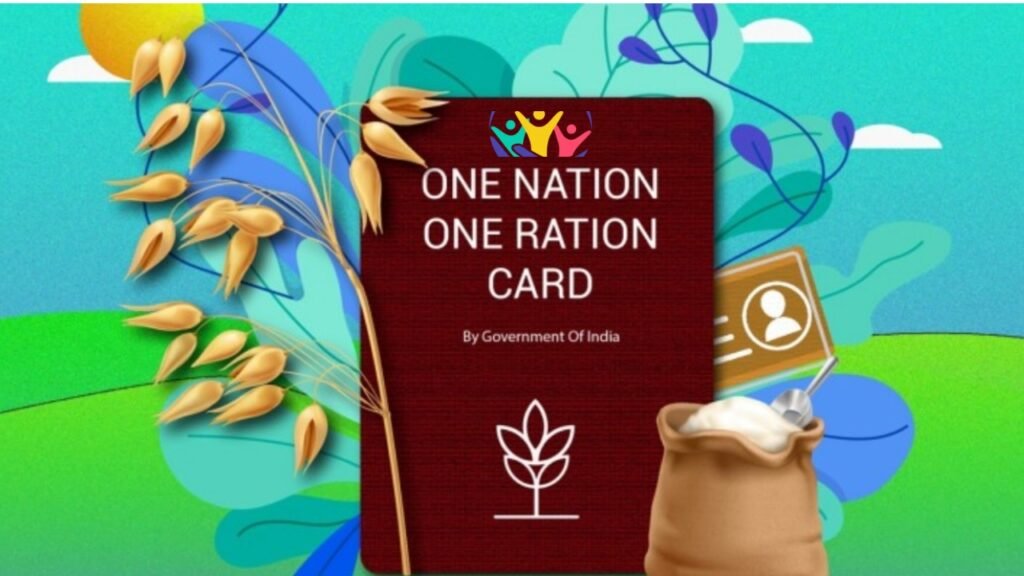
One of the biggest food security reforms in India, the One Nation One Ration Card (ONORC) scheme guarantees access to subsidized food grains to all eligible beneficiaries from any Fair Price Shop (FPS) anywhere in the country. Launched as part of the National Food Security Act (NFSA), 2013, the scheme is particularly advantageous to migrant workers, daily wage earners and families who migrate from one area to another for employment or education.
Under ONORC, a ration card holder is entitled to get subsidised food grains from his registered ration shop. The scheme has, however, removed geographical restrictions with the spread of nationwide portability in ration cards through Aadhaar-verified digital integration.
This guide will help you learn all about the One Nation One Ration Card scheme, how it works, features, objectives, advantages, eligibility criteria for the scheme, and how to register for One Nation One Ration Card.
What is One Nation One Ration Card?
The One Nation One Ration Card (ONORC) is a central government project that allows the portability of rations across India. For instance, this permits beneficiaries under the National Food Security Act (NFSA) to procure subsidized food grains from any ration shop across the nation and not just their home state ration retailers.
The scheme uses:
- Aadhaar authentication
- Electronic Point of Sale (ePoS) machines
- Integrated Public Distribution System (PDS)
- Real-time beneficiary verification
This digital system ensures transparency while making food distribution more accessible for millions of migrant workers.
Objectives of One Nation One Ration Card
ONORC aims primarily to ensure that no eligible citizen loses their entitlement to subsidized food, even if they migrate or relocate.
Major objectives include:
- Provide nationwide ration portability.
- Help migrants and their families.
- Reduce food insecurity.
- Dismantle duplicate and false ration cards
- Enhancing transparency in the Public Distribution System.
- Improve accountability in ration distribution.
- The beneficiary to be allowed the freedom of choice of any Fair Price Shop.
Key Features of ONORC
The One Nation One Ration Card scheme comes with several important features that improve accessibility and transparency.
| Feature | Description |
| Nationwide Portability | Collect ration anywhere in India |
| Aadhaar Authentication | Secure beneficiary verification |
| Digital ePoS Machines | Electronic ration distribution |
| Real-Time Transactions | Instant verification of ration availability |
| Family Flexibility | Family members can collect ration separately |
| Transparency | Reduces fraud and duplication |
| Integrated PDS | Connected across states and UTs |
Benefits of One Nation One Ration Card
The initiative has made the operation of the Public Distribution System in India flexible, citizen-friendly.
1. Nationwide Access
State-wise ration from any Fair Price Shop (FPS) in India would be given to beneficiaries.
2. Helps Migrant Workers
No loss of access to subsidized food when workers move to new states.
3. Reduces Corruption
Digital authentication will reduce the chances of fake beneficiaries and duplication of ration cards.
4. Greater Convenience
The options to avail from any ration shops loacted near rather going to your registered arc.
5. Improved Food Security
They also have the guarantee of access to basic food grains even when they migrate.
6. Family Flexibility
Where the system permits, for one member of family who migrates to work, remaining earners may also have their entitled claim independently.
7. Better Transparency
All ration transactions are digitally recorded.
Who is Eligible for One Nation One Ration Card?
The scheme is available for beneficiaries covered under the National Food Security Act.
Eligibility Criteria
- Must possess a valid NFSA ration card.
- Aadhaar should preferably be linked with the ration card.
- Beneficiary details should be updated in the state’s PDS database.
- Must belong to eligible categories approved under NFSA.
Documents Required
Applicants generally need the following documents for updating or obtaining a ration card under the state’s Public Distribution System.
| Document | Purpose |
| Aadhaar Card | Identity verification |
| Existing Ration Card | Beneficiary verification |
| Mobile Number | OTP and communication |
| Passport-size Photograph | Identity record |
| Address Proof | Residential verification |
| Family Details | Member verification |
How Does One Nation One Ration Card Work?
The ONORC system operates through a digital Public Distribution System in an integrated fashion.
Step-by-step process
- Step 1: Go to any Fair Price Shop all over India.
- Step 2: State to The Dealer That You Would Be Using Your Ration Card Under ONORC
- Step 3: Then you are going to enter your ration card number or your Aadhaar number.
- Step 4: Authenticate via fingerprint or iris scan through the ePoS machine
- Step 5: The online system checks your eligibility.
- Step 6: Now get the food grains that you are eligible for
The central database is immediately notified of the transaction to avoid double spending.
Food Grains Available Under ONORC
Eligible beneficiaries generally receive subsidized food grains under the Public Distribution System.
| Food Item | Availability |
| Rice | Subsidized |
| Wheat | Subsidized |
| Coarse Grains | Available in selected states |
| Sugar | Depends on state policy |
| Kerosene | Available in some states |
| Other Essential Commodities | State-specific |
Registration Process
There is no separate registration required for most existing NFSA beneficiaries.
If you already have:
- A valid ration card
- Aadhaar linked with ration card
- Updated family information
your ration card is generally enabled for portability once your state integrates with the ONORC system.
For new ration cards:
- Apply through your state’s Food and Civil Supplies Department.
- Submit required documents.
- Complete Aadhaar verification.
- Receive the ration card.
- Once activated, it becomes eligible for portability under ONORC where applicable.
States Covered Under ONORC
Under the integrated Public Distribution System, the One Nation One Ration Card scheme is being implemented in almost all Indian states and Union Territories, leading to the use of ration portability by eligible beneficiaries throughout the country. Beneficiaries need to check that their ration card details are correctly updated with Aadhaar, and Aadhaar should be linked for seamless transactions.
Challenges of the Scheme
While ONORC has substantially increased access to rations, challenges nevertheless exist.
Some common challenges include:
- Connectivity problems with the Internet in remote areas.
- Fingerprint authentication failures.
- Outdated beneficiary records.
- Aadhaar linkage delays.
- Lack of awareness among beneficiaries.
- Technical issues with ePoS machines.
We are working with the government and state authorities to realise these areas through more infrastructure upgrades and awareness campaigns.
Also Read: Mission Shakti Scheme | National Career Service | Digital India Mission
Impact of One Nation One Ration Card
The scheme has benefited millions of people, particularly working migrant workers who have made inter-State livelihood mobility a common norm. It has created a universal access-based food security architecture for India, wherein subsidized food is available irrespective of distance.
Some major outcomes include:
- Increased portability of ration benefits.
- Improved transparency in food distribution.
- Better tracking of ration transactions.
- Reduced duplication of ration cards.
- Enhanced convenience for beneficiaries.
- Stronger digital Public Distribution System.
Tips for Beneficiaries
If you are planning to experience ONORC without any hassle, remember this.
- They should be linked with your ration card.
- Update mobile number regularly.
- Verify family member details.
- Keep biometric information updated.
- Head to an authorized fair Price Shop.
- See how much ration you get in a month
- Discrepancies can be reported at your local food and civil supplies department.
FAQs about One Nation One Ration Card
1. What is One Nation One Ration Card?
It is a government initiative that allows eligible NFSA beneficiaries to receive subsidized food grains from any Fair Price Shop across India.
2. Who can use ONORC?
Any eligible beneficiary holding a valid NFSA ration card can use the portability facility, subject to system requirements.
3. Is Aadhaar mandatory?
Aadhaar linkage and biometric authentication are widely used for seamless portability. Requirements may vary in exceptional situations based on applicable government guidelines.
4. Can I collect ration from another state?
Yes. Eligible beneficiaries can obtain their entitled ration from another participating state or Union Territory.
5. Is there any registration fee?
No. There is no separate fee for using the One Nation One Ration Card portability facility.
6. Can family members collect ration separately?
Yes, where the system supports split transactions, different family members may collect their entitled share from different locations.
7. What should I do if biometric authentication fails?
You should contact the Fair Price Shop dealer or your local Food and Civil Supplies Department for assistance. Alternative authentication methods may be available in accordance with government guidelines.
Conclusion
The One Nation One Ration Card (ONORC) scheme has revolutionized India’s Public Distribution System (PDS) in favour of nationwide portability of subsidised food grains. This will give migrant workers more freedom, and things like digital authentication improve transparency; also, it assures that families entitled to limited food supplies have access to the same benefits anywhere in the nation.
ONORC is a significant step in enhancing food security, minimizing leakages, and making public services more accessible for every eligible citizen, as India strengthens its digital governance and welfare delivery systems. Maintaining updated details behind ration cards and Aadhaar linking, if needed, can help beneficiaries leverage both the convenience and advantages of this national scheme to the full extent.
Also Read: ehrms.upsdc.gov.in | tafcop.dgtelecom.gov in | Is Xovfullmins Dangerous? | PNB HRMS 2.0 Login