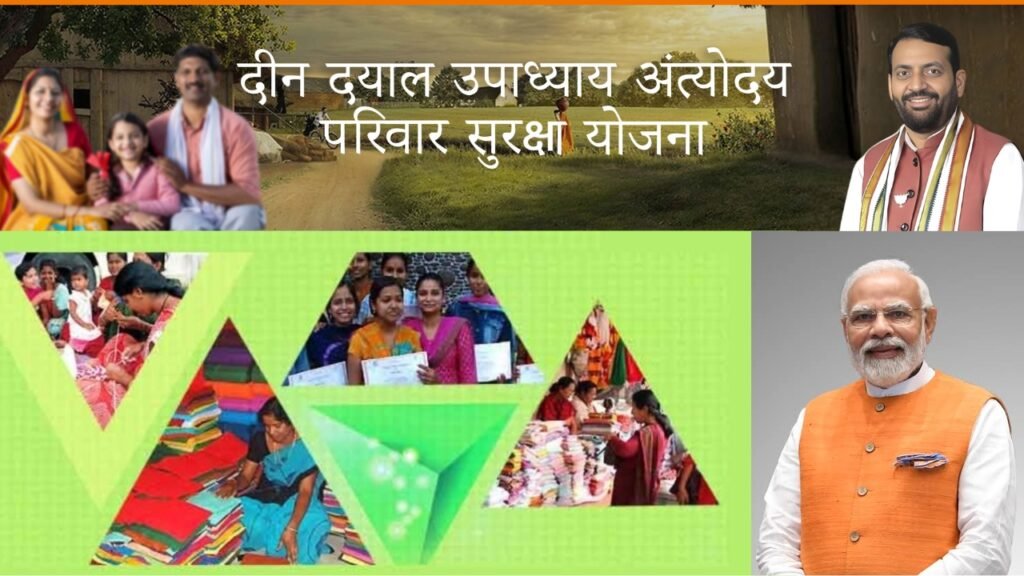
One of India’s largest ongoing efforts to reduce poverty and promote livelihood is through Deendayal Antyodaya Yojana (DAY). The scheme was launched by the Government of India to reduce poverty through providing sustainable livelihood opportunities to both urban and rural poor households. The scheme, named after Pandit Deendayal Upadhyaya, aims at empowering the marginalised sections of society through Skills, self-employment, Financial inclusion, and Social mobilisation.
Deendayal Antyodaya Yojana – An initiative helping the poor. The core objective of Deendayal Antyodaya Yojana is to provide every poor family with livelihood, employment and financial assistance. The scheme has two main components – the National Rural Livelihoods Mission (NRLM), and the National Urban Livelihoods Mission (NULM). It will not take long for millions to be lifted out of poverty and become self-sufficient and economically what they once were.
The complete details of Deendayal Antyodaya Yojana, which consists of targets, characteristics, advantages, eligibility conditions, implementation, and impact, are given in this article.
What is Deendayal Antyodaya Yojana?
Answer: D) Deendayal Antyodaya Yojana A centrally sponsored scheme of the Government of India aimed at reducing poverty in rural areas. The program aims at imparting skills and promoting entrepreneurship-based sustainable livelihood generation.
It aims to provide financial and skill assistance to the poor of India by organising them in Self Help Groups (SHGs) with a form of microcredit for income generation.
Overview of Deendayal Antyodaya Yojana
| Particulars | Details |
| Scheme Name | Deendayal Antyodaya Yojana (DAY) |
| Launched By | Government of India |
| Launch Year | 2014 |
| Ministry | Ministry of Rural Development & Ministry of Housing and Urban Affairs |
| Objective | Poverty Reduction and Livelihood Promotion |
| Beneficiaries | Rural and Urban Poor |
| Components | DAY-NRLM and DAY-NULM |
| Focus Areas | Employment, Skill Development, Self-Employment, Financial Inclusion |
Objectives of Deendayal Antyodaya Yojana
This scheme was initiated with a few major objectives of increasing the standard of living for low-income families.
Poverty Alleviation
Sustainably increasing income seismic boosts through poverty reduction has been a key objective for them.
Skill Development
Under this scheme, youth and adults get vocational training and skill development for the purpose of employability.
Promotion of Self-Employment
DAY promotes entrepreneurship through small and micro-enterprises as well as self-employment.
Financial Inclusion
Providing poor households with banking facilities and credit availability by introducing some financial literacy schemes.
Social Empowerment
It fosters social inclusion and community development by organising beneficiaries into Self-Help Groups (SHGs).
Components of Deendayal Antyodaya Yojana
The scheme has two major components, where the needs of the urban population are separate from and Rural ones as well.
1. National Rural Livelihoods Mission (DAY-NRLM)
With prominent emphasis on social mobilisation of every marginalised rural household, the National Rural Livelihoods Mission strives to make sustainable livelihood opportunities accessible by providing coverage in the way of social capital building and financial assistance.
Key Features of DAY-NRLM
- Formation of Self-Help Groups (SHGs)
- Access to low-interest loans
- Promotion of rural entrepreneurship
- Skill development training
- Women’s empowerment initiatives
- Livelihood enhancement activities
Benefits of DAY-NRLM
| Benefit | Description |
| Financial Support | Easy access to credit and loans |
| SHG Formation | Encourages collective savings and entrepreneurship |
| Skill Training | Improves employability and income opportunities |
| Women Empowerment | Enhances participation in economic activities |
| Rural Development | Promotes sustainable livelihoods |
2. National Urban Livelihoods Mission (DAY-NULM)
The National Urban Livelihoods Mission focuses on reducing urban poverty by helping urban poor households secure gainful employment and establish self-employment ventures.
Key Features of DAY-NULM
- Skill training for urban youth
- Employment through placement programs
- Support for street vendors
- Shelter for urban homeless
- Entrepreneurship development
- Access to affordable credit
Benefits of DAY-NULM
| Benefit | Description |
| Employment Opportunities | Placement-linked skill training |
| Self-Employment Support | Assistance for starting businesses |
| Financial Inclusion | Access to formal banking services |
| Homeless Support | Shelter and rehabilitation programs |
| Street Vendor Assistance | Improved livelihood opportunities |
Also Read: PM Jeevan Jyoti Bima Yojana | PM Kisan Samman Nidhi | PM Suraksha Bima Yojana
Key Features of Deendayal Antyodaya Yojana
The success of the scheme lies in its comprehensive approach to poverty reduction.
Self-Help Group Formation
The establishment of Self-Help Groups is one of the significant components within DAY itself. They promote savings, joint decision-making, and access to financial resources.
Skill Development Programs
The scheme offers training in multiple trades and professions, which include:
- Tailoring
- Computer operations
- Retail management
- Hospitality services
- Construction work
- Manufacturing activities
Entrepreneurship Promotion
They receive help to plan, training and financial support to start micro-enterprises in rural areas or small businesses within urban sectors.
Credit Linkage
It enables beneficiaries to gain access to institutional credit from banks and financial institutions as it helps the beneficiaries in enlarging their economic activities.
Eligibility Criteria for Deendayal Antyodaya Yojana
The scheme targets economically weaker sections of society.
Rural Beneficiaries
To qualify under DAY-NRLM, applicants should:
- Belong to rural households
- Be identified as economically disadvantaged
- Meet the eligibility criteria established by local authorities
Urban Beneficiaries
To qualify under DAY-NULM, applicants should:
- Belong to urban poor households
- Be unemployed or underemployed
- Meet income-related criteria specified by the government
How to Apply for Deendayal Antyodaya Yojana
The application process varies depending on the component and state-level implementation.
Step 1: Identify Eligibility
Applicants should confirm their eligibility through local government offices or mission units.
Step 2: Contact Local Authorities
Interested individuals can approach:
- Gram Panchayats
- District Rural Development Agencies
- Municipal Corporations
- Urban Local Bodies
Step 3: Submit Required Documents
Applicants may need:
- Aadhaar Card
- Identity Proof
- Address Proof
- Income Certificate
- Bank Account Details
- Passport-size Photographs
Step 4: Verification Process
Authorities verify documents and eligibility before approving applications.
Step 5: Enrollment and Training
Approved beneficiaries are enrolled in relevant livelihood, skill development, or self-employment programs.
Major Achievements of Deendayal Antyodaya Yojana
The scheme has proved to be an important initiative ever since its launch by bringing down poverty and improving livelihoods in India.
Women’s Empowerment
Through savings and entrepreneurship activities, millions of women trained and organised in Self-Help Groups have become financially independent.
Employment Generation
Skill training and employment for thousands of youth/adults is what this scheme has given.
Financial Inclusion
This formalisation resulted in beneficiaries having access to the banking system and a reduction in reliance on informal lenders.
Rural Economic Growth
Among the few supportive measures that have aided the strengthening of rural economies via sustainable livelihood initiatives since its inception long back include DAY-NRLM.
Challenges Faced by the Scheme
Despite its success, certain challenges remain.
Limited Awareness
In fact, even many of the eligible beneficiaries do not know about the scheme and its advantages.
Skill Matching Issues
In several parts of the world, training programs cannot be right in sync with local market needs.
Access to Credit
The credit linkage has also improved, but there are still issues with adequate and timely financial support for some beneficiaries.
Monitoring and Evaluation
Monitoring is still relevant to maximise the impact and efficient implementation.
Conclusion
The Deendayal Antyodaya Yojana (DAY-NRD) A transformative programme helping create sustainable livelihoods and eradicate poverty across India. Skill trainings, employment opportunities, financial inclusion and entrepreneurship development are the focus of the scheme, which empowers millions of us through its rural and urban livelihood missions.
An emphasis on self-help and economic independence, DAY also plays a vital role in the larger scheme of inclusive growth and social development. With its growing emphasis and features, the scheme continues to be an essential tool for Indian policymakers in the fight against poverty and towards sustainable development goals.
Frequently Asked Questions
1. What is Deendayal Antyodaya Yojana?
Deendayal Antyodaya Yojana is a government scheme aimed at reducing poverty and promoting sustainable livelihood opportunities for rural and urban poor households.
2. Who can benefit from Deendayal Antyodaya Yojana?
Economically weaker rural and urban households, unemployed youth, women, self-help groups, and aspiring entrepreneurs can benefit from the scheme.
3. What is the main objective of the scheme?
The primary objective is to alleviate poverty through skill development, employment generation, self-employment, and financial inclusion.
4. Does the scheme provide financial assistance?
Yes, beneficiaries can access loans, credit facilities, and financial support through self-help groups and linked financial institutions.
Also Read: hrms globex | ehrms upsdc gov in | what about xovfullmins | Rani Lakshmi Bai Scooty Yojana